 MathQuest
1. Numbers to 120 and tens and ones
What is your child learning?
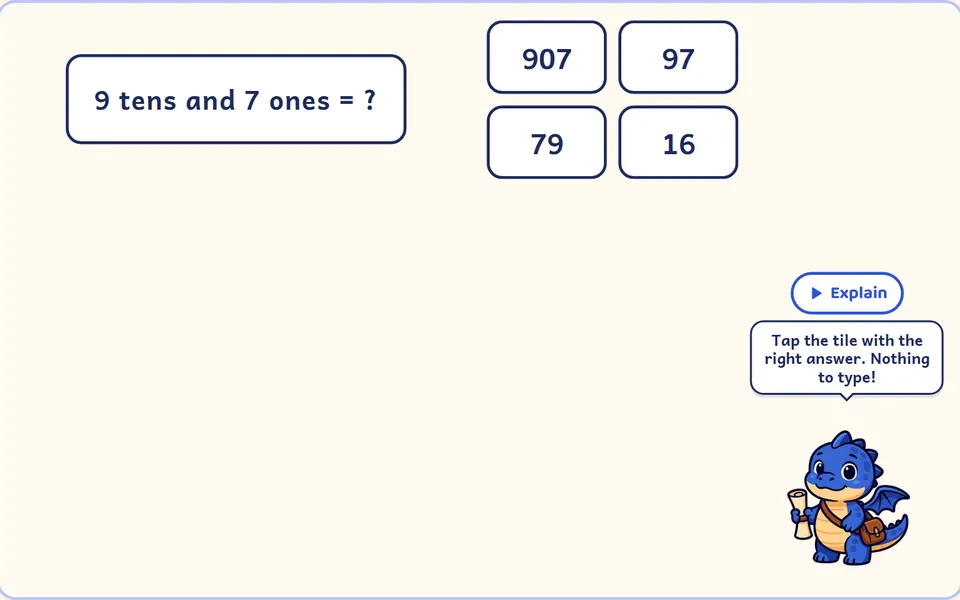
Children learn to read, order and represent numbers to at least 120. They begin breaking numbers into parts, including tens and ones. For example, 46 is four tens and six ones. A child can also see 46 as 40 plus 6 or as 30 plus 16.
Knowing where a digit sits helps children make sense of bigger numbers. You might notice your child is confident counting but less certain when comparing 46 and 64. Moving blocks or drawing tens makes the difference easier to see.
How MathQuest helps
Balloon Pop asks children to pop numbers up to 120 in order, smallest first. Place value asks what number a set of tens and ones makes.
MathQuest games: Balloon Pop, Place value
Try it at home
Use Lego to make towers of ten, then add single pieces. Ask your child to show 32, then 23, and explain the difference. You can also spot house numbers on the drive to school, or even at the self check-out register when doing the grocery shopping.
Australian Curriculum: AC9M1N01, AC9M1N02